
Benefits and shortfalls of including aspheric elements in optical designs
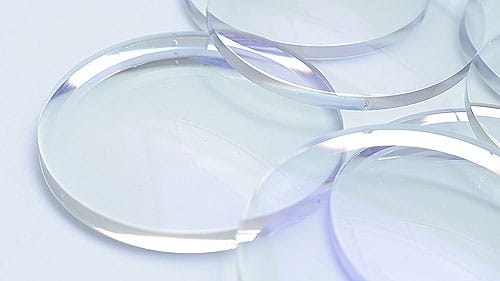
However, driven by growing demand for more compact optical products with superior imaging performance (higher resolution, minimal distortion and no spherical aberration), aspheric lenses are becoming an essential tool used by optical designers.
Aspheric lenses can be made from various materials, primarily glass and plastic. Glass lenses offer higher optical quality, better thermal stability, and durability, making them suitable for high-precision and high-power applications. If your required quantities justify it then free form moulded plastic aspheric elements are the answer to producing small zero distortion lenses with very short register.
Recently we designed a customer defined aspheric lens for a military application. The Model 524-000 is an f/1.1, 65° FOV Infrared lens that does not contain any Germanium. Designed to meet the requirements of a high-definition sensor working in the 8 to12 micron waveband, this high-performance lens uses an aspheric element to achieve the FOV whilst keeping the optical design as small as possible.
Contact our design team now for a free consultation.